Support Local: Why Your Favorite Cafe in Monument, CO Matters
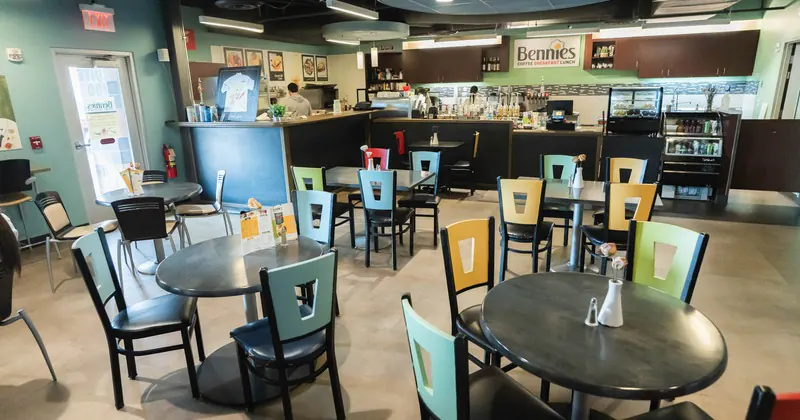

A good local cafe does more than pour coffee and warm pastries. It shapes the pace of a town. It gives people a place to begin the day, hold a quiet conversation, finish a deadline, or sit alone without feeling isolated. In a place like Monument, where community identity still carries real weight, a neighborhood cafe often becomes one of the few spaces where daily life overlaps naturally. Parents stop in after school drop-off. Remote workers claim a corner table. Contractors grab a cup before heading to a jobsite. Retirees linger over a second refill and catch up on local news that never makes it online.
That is why the conversation around supporting local businesses cannot stay abstract. When people choose a local Cafe Monument, CO over a national chain a few miles away, they are not making a sentimental gesture. They are making a practical investment in the character, resilience, and economy of their own town.
The value is visible long before you look at the numbers
Anyone who has spent time in a small or mid-sized Colorado community has seen the difference between a thriving local business district and a strip of interchangeable storefronts. One feels anchored. The other feels temporary. Cafes sit right at the center of that contrast because they attract repeat visits in a way few businesses do. Most people do not buy furniture three times a week. They absolutely buy coffee three times a week, sometimes twice in one day.
That frequency matters. A local cafe becomes familiar quickly. Staff members learn names, drink orders, work schedules, and family routines. The owner notices which tables fill first when the weather turns cold. Regulars recognize each other even if they never exchange more than a nod. Over time, the place starts to function as informal civic infrastructure.
In Monument, where growth and change have accelerated over the years, those familiar spaces matter even more. Towns on the Front Range often face a quiet tension. People move in because they want mountain views, cleaner air, and a stronger sense of place. Then, if local businesses struggle, the town slowly begins to resemble every other corridor of chain retail. A favorite cafe can seem small in that equation, but it often acts as one of the last strongholds of local character.
A local cafe keeps more money circulating nearby
The economic case for shopping local is not new, but it is still widely misunderstood. People tend to picture only the retail transaction: one latte bought, one receipt printed. The real story is broader. Locally owned businesses are more likely to spend with nearby accountants, local maintenance crews, regional food suppliers, print shops, and tradespeople. They hire residents. They sponsor school events. They tip local musicians for live performances. They buy snow removal services in winter and window washing in spring.
None of that means every dollar stays in town. That would be unrealistic. Coffee beans may come from outside Colorado. Equipment parts may ship from elsewhere. Insurance, software, and utilities all pull money outward. Still, compared with a large chain, a truly local cafe usually creates a denser web of nearby economic activity.
That web becomes especially important in a town like Monument, where small business health can influence how self-sustaining the local economy feels. When residents regularly support a Cafe Monument, CO, the impact reaches beyond one balance sheet. It helps preserve jobs that are harder to relocate, relationships that cannot be outsourced, and entrepreneurial confidence that encourages the next business owner to sign a lease.
From experience, one of the clearest signs of a healthy local economy is not flashy development. It is whether independent businesses can survive ordinary months. Not just summer weekends. Not just the holiday rush. A town shows its strength when a locally owned cafe can count on enough weekday business in February to keep the lights on, retain staff, and order inventory with confidence.
The staff behind the counter are part of the community too
People often talk about small businesses as if they are faceless entities that simply need “support.” In reality, the staff at a local cafe usually live close by. They may be high school students earning their first steady paycheck, young adults saving for college, parents working part-time around family obligations, or long-time hospitality workers who know exactly how to run a room during a morning rush.
When a cafe has stable local support, those jobs become steadier and better. Scheduling improves. Turnover slows. Training gets stronger. The quality of service rises because staff can stay long enough to build skill and confidence. Customers feel that difference immediately.
There is a practical dignity in being known at work. In a local cafe, an employee is not just a uniform behind a register. They are often recognized as a neighbor. That changes the atmosphere for everyone. It tends to make service more patient, complaints more human, and mistakes easier to resolve. It also creates a stronger standard of accountability. In a small town, reputation travels quickly. Businesses know this, and good ones treat it seriously.
A cafe is one of the last low-barrier public gathering spaces
Many public places require a reason to be there. Offices require employment. Gyms require membership. Restaurants often assume a faster turnover and a larger check. Bars serve a different purpose and exclude part of the population by age or preference. A cafe is unusual because it can accommodate short visits, long visits, solo visits, business meetings, family breaks, and quiet downtime all under the same roof.
That flexibility gives local cafes cultural value that is easy to miss. They create a semi-public space where people can participate in community life without a formal invitation. You do not need a board position, a season pass, or a social circle. You need enough money for a basic drink, and often not even that if you are meeting someone else there.
For a town like Monument, this matters. Communities need places where connection can happen casually rather than ceremonially. The best relationships in a town are not always built at major events. They often start in small, repeated encounters. A wave in line. A quick conversation over a laptop charger. A recommendation for a local plumber, pediatrician, or hiking trail. That social glue is not trivial. It is how trust gets built.
The atmosphere of a local cafe cannot be standardized
National chains are designed for consistency. There is comfort in that. Travelers know what they are getting. Busy people appreciate predictability. But consistency has a trade-off. It tends to flatten personality.
A strong local cafe develops a specific identity shaped by its owners, staff, building, customers, and town. The menu reflects local preferences. The seating may favor conversation over throughput. The art on the walls often comes from nearby makers. Even the sound of the room differs. Some cafes feel like a place to work. Others feel like a place to pause. The best ones know what they are and do not try to imitate every trend at once.
That identity has business value. People return to places that feel distinct. They recommend them to visiting friends and family. They post photos not because the branding department engineered a campaign, but because the setting actually looks and feels memorable. For Monument, that kind of distinctiveness contributes to a larger sense of place. It tells residents and visitors that the town has its own flavor, not just its own ZIP code.
Convenience is real, but so is the cost of choosing convenience every time
No honest conversation about local spending should ignore trade-offs. Chain coffee shops often have better drive-thru systems, longer hours, larger marketing budgets, and aggressive loyalty programs. They may be easier to spot from the road. They may also offer lower prices on some items because of purchasing scale.
Those advantages are real. They are also exactly why local businesses need intentional support rather than passive goodwill. If residents only choose the independent shop when they have extra time, extra money, or guests in town, the local business becomes a luxury option instead of a durable one. That is a hard model to sustain.
Supporting local does not mean pretending every experience is perfect. Independent cafes can have shorter hours, occasional staffing gaps, slower ticket times during a rush, or a menu that changes when supplies fluctuate. Those are not always weaknesses. Sometimes they are the visible signs of a business operating at human scale rather than industrial scale. Still, customers should expect quality and professionalism. Local loyalty works best when paired with clear standards. People want to support a place that respects their time, delivers a good product, and improves over time.
From a practical standpoint, many regulars find a middle path. They reserve some purchases for the local shop even when a chain would be marginally easier. That could mean weekend coffee runs, weekday meetings, or buying whole beans and gift cards locally while using chains for the occasional rushed commute. Perfect purity is not the point. Consistency is.
What your spending actually signals
A receipt is never just a receipt. It is a vote for what you want more of in town. If residents spend heavily on drive-thru chains and lightly on local gathering spaces, the market receives that message. Investors, landlords, and future entrepreneurs receive it too. They see what appears to be viable.
That is one reason local business closures can feel so sudden. Usually, they are not sudden at all. They are the result of thin margins, Cafe Monument, CO rising labor costs, rent pressure, seasonal demand swings, and too many weeks when people meant to stop by but did not. Cafes are especially vulnerable because their margins can be narrow, spoilage is real, and labor is constant. Milk, baked goods, fresh ingredients, utilities, card processing fees, maintenance, insurance, and payroll all continue whether the room is full or half empty.
Customers do not need to become amateur accountants to understand the stakes. They only need to recognize that independent food and beverage businesses rarely have much slack. A few dozen regulars can make a meaningful difference over the course of a month. A few hundred can change whether the business expands hours, hires another employee, or starts hosting community events.
Local cafes often support the town in ways that never hit the ledger cleanly
One underappreciated truth about small businesses is how often they say yes to requests that are not strictly profitable. A local cafe might donate coffee for a school function, sponsor a youth team, post flyers for a fundraiser, host a book club, offer space for a nonprofit meeting, or display work by a local artist who needs visibility more than commission income.
Large companies sponsor communities too, but the logic is different. It often runs through budgets, approval layers, and regional marketing plans. At a local cafe, support is usually personal. Someone knows the teacher asking for a donation. Someone on staff has a sibling in the school play. The owner recognizes the family organizing the benefit.
This is how a town develops mutual obligation rather than just commercial activity. Monument benefits when businesses see themselves as part of the social fabric, not merely tenants extracting revenue from foot traffic. Residents benefit too, because they live in a place where relationships still have practical consequences.
Why local matters even more in a town that is growing
Growth brings opportunity, but it also brings a subtle risk of cultural drift. Monument has attracted people for good reason. It offers access to the outdoors, proximity to larger employment centers, and a pace that still feels more grounded than many busier suburban corridors. As growth continues, one of the key questions becomes whether the town can absorb change without losing its small-town recognizability.
Local businesses help answer that question. They preserve texture. They create places where new residents and long-time residents share the same room without needing a formal forum. A neighborhood cafe does that particularly well because the barrier to entry is low and the use cases are broad.
Without those spaces, growth can become socially fragmented. People commute out, shop by habit, and retreat home. The town remains geographically shared but emotionally thin. A well-loved Cafe Monument, CO helps Cafe Monument, CO resist that pattern. It gives the town a lived center, even if unofficial.
Quality, not guilt, should drive loyalty
The strongest local businesses do not survive on guilt. They survive because they are good. They offer a clean space, consistent drinks, thoughtful food, fair service, and an atmosphere that rewards repeat visits. Customers should not feel pressured to patronize a business solely because it is local. They should feel pleased that a local option competes well on merit.
That said, customers can broaden their definition of value. Price matters, but it is not the only measure. So is convenience, but not the only one there either. A slightly higher-priced coffee at an independent cafe may come with better service, a calmer room, stronger neighborhood ties, and a purchase that supports local payroll instead of distant shareholders. Whether that matters enough to change behavior is a personal choice. For many people, once they see the full picture, it does.
The same applies to patience. At a local shop, there may be one person on bar and one on register during a slow weekday, because that is what the economics allow. If a busier-than-usual rush forms, the wait may stretch. Customers who understand small business operations tend to grant a little grace while still expecting competence. That balance, supportive without being indulgent, is healthy for both sides.
Small habits are usually more valuable than grand gestures
People often imagine support as a dramatic act, something tied to a special campaign or holiday shopping push. In reality, local cafes benefit most from modest, repeatable habits. The occasional social media post can help. So can a positive review. But steady purchases, word-of-mouth referrals, and choosing the local spot for ordinary meetings usually matter more.
Here are a few ways regular customers make a real difference without turning it into a project:
- Choose the local cafe for recurring routines, not just special treats.
- Buy gift cards that introduce friends, teachers, or coworkers to the business.
- Meet clients or colleagues there when the setting fits.
- Leave detailed, honest positive reviews when the experience is good.
- Show up in slower seasons, not only during peak tourism or holiday traffic.
None of those actions are complicated. Their power comes from repetition. Small businesses are built on repeated choices by ordinary customers, not on occasional rescue missions.
The deeper reason people fight for places like this
Ask someone why they care about their favorite local cafe, and they may start with the obvious answer. The coffee is better. The scones are fresh. The space is quiet enough to think. Those things matter, and they should. But if you listen longer, the deeper answer usually surfaces. People care because the place became attached to their routine, their relationships, and their memory of the town.
It might be where they met a friend after a hard week. Where they worked through the first months of a new business. Where they brought visiting family to show off a piece of Monument that feels authentically local. Where a barista remembered their order during a rough season when being recognized meant more than they expected.
That is the part national chains cannot replicate at scale. They can offer familiarity. They cannot offer your town’s own memory of itself.
What happens if local places disappear
When independent cafes close, the loss tends to be discussed in terms of nostalgia. People say they miss the muffins, the corner table, the holiday drinks. All of that is true, but the more lasting loss is structural. The town loses one of its informal meeting grounds. Local artists lose a display wall. Students lose a study spot. Residents lose one more reason to stay in town for daily life rather than defaulting to a regional pattern of drive, buy, leave.
The next business owner notices too. If opening an independent cafe looks too risky, maybe they choose a safer concept, or another town, or no storefront at all. Over time, the business ecosystem becomes narrower. Residents have fewer distinctive places to gather, and the town becomes more dependent on businesses whose strategic decisions are made elsewhere.
That outcome is not inevitable, but it is common enough to deserve attention. Communities usually recognize the importance of local businesses most clearly after they are gone. By then, the warm language comes easily. The spending did not.
A town is built through ordinary choices
Support for a local cafe does not need to be loud to be meaningful. It just needs to be real. A town like Monument is shaped less by slogans than by where people spend their mornings, hold their meetings, linger on weekends, and bring out-of-town guests when they want to say, “This is us.”
When you choose a local Cafe Monument, CO, you are doing something more substantial than buying a drink. You are helping keep a third place alive, sustaining local jobs, reinforcing the town’s identity, and backing the kind of economy that still has a human face. You are also preserving one of the few spaces where community happens without choreography.
For a lot of towns, that would be reason enough. For Monument, it may be essential.
Bennies Cafe
17230 Jackson Creek Pkwy Ste 100, Monument, CO 80132
+1 719-445-0660
FAQ About Cafe Monument, CO
What is considered a café?
A café is generally an informal place to enjoy refreshments and a meal. Bennies Cafe in Monument serves breakfast and lunch in a counter-service setting, with options including eggs Benedict, sandwiches and crepes. Guests can eat in or arrange pickup.
What is the difference between a coffee shop and a café?
The terms often overlap. A coffee shop usually emphasizes coffee and other drinks, while a café may offer a broader food menu. Check the individual establishment's menu rather than relying on its name. Bennies Cafe offers coffee drinks alongside breakfast and lunch dishes.
What is the difference between café and coffee?
In everyday English, a café is a place where people buy food and drinks, while coffee is the beverage. The word café comes from the French word for coffee. Bennies Cafe serves options such as brewed coffee, espresso and lattes as part of its drinks menu.